Polygraph Test: What It Really Tells You (and What It Doesn’t)
Most people picture a polygraph test as that tense movie scene: wires attached, a stern examiner watching every twitch, and a single question hanging in the air. “Did you do it?”
It feels decisive. Scientific. Almost like a machine that can see through you.
But here’s the thing—polygraphs don’t detect lies. Not directly, anyway. What they actually measure is something a lot messier: your body’s reaction to stress.
And stress, as you probably know, doesn’t always mean guilt.
So let’s unpack what’s really going on behind that machine, why people still use it, and what you should keep in mind if you ever find yourself sitting in that chair.
What a Polygraph Actually Measures
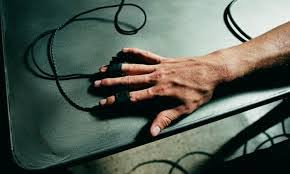
A polygraph test records a handful of physical responses. Breathing. Heart rate. Blood pressure. Skin conductivity—basically how sweaty your fingers get.
The idea is simple on paper. When people lie, they get nervous. That nervousness shows up in the body. The machine picks it up. The examiner interprets it.
Sounds clean, right? It isn’t.
Because your body reacts to all kinds of things. Anxiety. Embarrassment. Fear of being misunderstood. Even just the pressure of being tested.
Imagine this: someone asks you, “Have you ever stolen anything?”
You remember that time you took a pen from work five years ago. It wasn’t a big deal. But now you’re hooked up to a machine and suddenly it feels like a confession moment. Your heart rate spikes. Not because you’re hiding a crime—but because you’re human.
That’s where things get blurry.
The Role of the Examiner
A lot of people assume the machine does the judging. It doesn’t. The examiner does.
They design the questions. They decide which responses matter. Interpret the results.
That introduces a big human element into something that’s often presented as objective.
Good examiners are trained to establish a baseline—how your body reacts to neutral questions versus emotionally loaded ones. They’ll ask things like:
“Is your name John?”
“Are you sitting down right now?”
Then they mix in relevant and control questions. Control questions are especially tricky. They’re designed to provoke a reaction in almost anyone, whether guilty or not.
For example: “Have you ever lied to someone who trusted you?”
Most people have. And most people will feel at least a flicker of guilt or discomfort.
That reaction becomes a comparison point.
So if your body reacts more strongly to the control question than the relevant one, you might be judged as truthful. If the opposite happens, eyebrows go up.
It’s less like reading a lie and more like comparing emotional spikes.
Why Polygraphs Are Still Used
If the system is so imperfect, why do polygraphs still exist?
Partly because they can be useful—not as a lie detector, but as a psychological tool.
Let’s be honest. Sitting in a room, wired up, with someone watching your every breath? That’s intense. Some people confess simply because the setup feels overwhelming.
Law enforcement agencies have used polygraphs in that way for decades. Not as final proof, but as a way to push conversations forward.
They’re also used in certain jobs, especially in security and intelligence roles. In those cases, the goal isn’t always to catch a specific lie. It’s to assess risk, consistency, and behavior under pressure.
Still, plenty of countries—and even courts within the U.S.—don’t accept polygraph results as solid evidence. That tells you something.
Can You Beat a Polygraph?
This question comes up all the time.
Short answer: it’s possible, but not in the way movies suggest.
People imagine elaborate tricks—putting a tack in your shoe, biting your tongue, doing mental math. Some of these methods aim to manipulate your physiological responses, especially during control questions.
But here’s the reality. Examiners are trained to watch for those tricks. Sudden, unnatural patterns can raise suspicion.
Also, trying to “game” the test can backfire. You might end up creating more irregular responses, not fewer.
There’s another angle people don’t talk about enough: some individuals naturally don’t show strong physiological reactions. Others react intensely to almost everything.
That alone can skew results, even without any intentional manipulation.
So yes, it’s possible to influence the outcome. But it’s not reliable, and it’s definitely not foolproof.
False Positives and False Negatives
This is where things get uncomfortable.
A false positive means the test suggests someone is lying when they’re telling the truth. A false negative is the opposite.
Both happen.
Think about a naturally anxious person. Maybe they’re being tested for something serious—like a workplace investigation. They know they’re innocent, but the stakes are high. Their body goes into overdrive.
The machine records that. The examiner interprets it. Suddenly, they look deceptive.
On the flip side, someone who’s calm, practiced, or emotionally detached might pass without issue—even if they’re hiding something.
That gap between reaction and reality is the biggest weakness of polygraphs.
Real-Life Situations Where Polygraphs Show Up
You’re not likely to encounter a polygraph in everyday life, but they do pop up in specific situations.
Job screenings are one. Certain government roles require periodic polygraph exams. People going into those jobs often describe the experience as more psychological than technical.
Then there are criminal investigations. Polygraphs might be used during questioning, but rarely as standalone evidence.
Sometimes they appear in personal situations too. Couples dealing with trust issues, for example. One partner suggests a polygraph to “prove” honesty.
That’s where things can get messy.
Because even if someone agrees to take the test, the result doesn’t necessarily settle anything. A “failed” result can deepen mistrust. A “passed” one might not fully convince a skeptical partner.
The machine can’t fix underlying relationship problems.
The Emotional Side of Being Tested
People underestimate how intense the experience can feel.
You’re in a controlled environment. You know you’re being evaluated. Every question carries weight.
Even if you’ve done nothing wrong, there’s pressure to “perform” truthfully. That sounds odd, but it’s real.
Your mind starts second-guessing everything.
“Am I breathing normally?”
“Was that reaction too strong?”
“Did that sound convincing?”
That internal noise can make your body react even more, creating a feedback loop.
Some people walk out of a polygraph feeling shaken, even when they pass.
Is It Fair?
That depends on how it’s used.
As a conversation tool or investigative aid, it has some value. It can prompt discussions, highlight inconsistencies, and sometimes lead to useful insights.
But as a definitive test of truth? That’s where it falls short.
Too many variables are at play. Personality, anxiety levels, cultural differences, even how well someone slept the night before.
It’s not a clean yes-or-no system, no matter how it’s presented.
Let’s be honest—humans are complicated. Truth and deception aren’t just switches you can flip on or off. They’re tangled up with emotion, memory, and context.
A machine can’t fully untangle that.
What to Keep in Mind If You Ever Take One
If you ever find yourself scheduled for a polygraph, the best thing you can do is understand what it is—and what it isn’t.
It’s not a mind reader. It’s not infallible. Tool that measures physical responses under pressure.
Go in calm, answer honestly, and don’t overthink every reaction. Trying to control your body too much can make things worse.
Also, remember that the examiner is part of the process. Communication matters. If something feels unclear or confusing, it’s okay to ask questions before the test begins.
And if the stakes are high—like legal or career-related—it’s worth getting proper advice beforehand.
The Takeaway
Polygraph tests carry a certain mystique. They feel authoritative, almost intimidating. But once you look under the hood, they’re far less definitive than they seem.
They measure stress, not truth.
That distinction matters more than most people realize.
Used carefully, they can be one piece of a bigger puzzle. Used carelessly, they can lead to wrong conclusions and unnecessary damage.
So if you ever hear someone say, “Just take a polygraph and prove it,” take that with a grain of salt.
It’s not that simple.